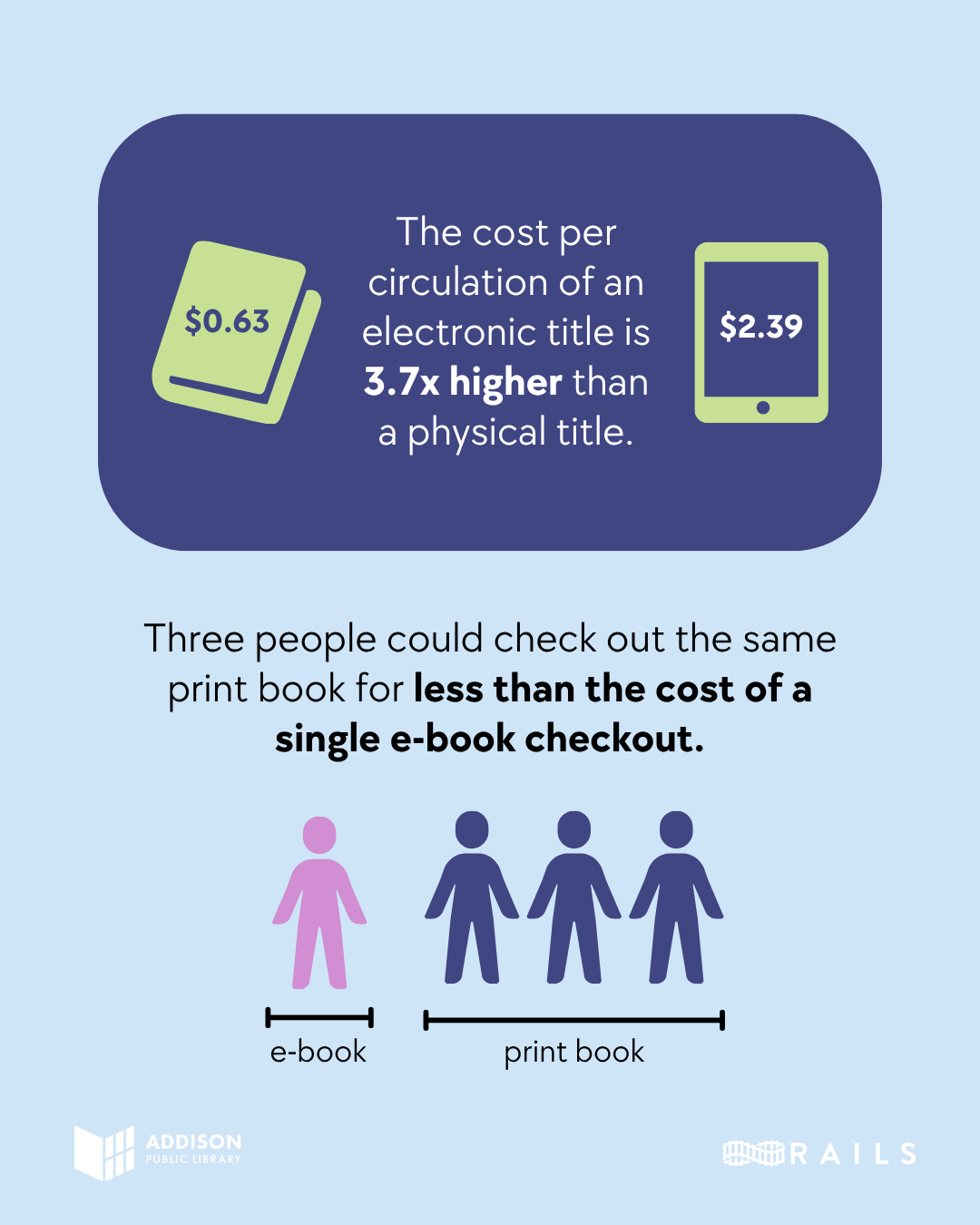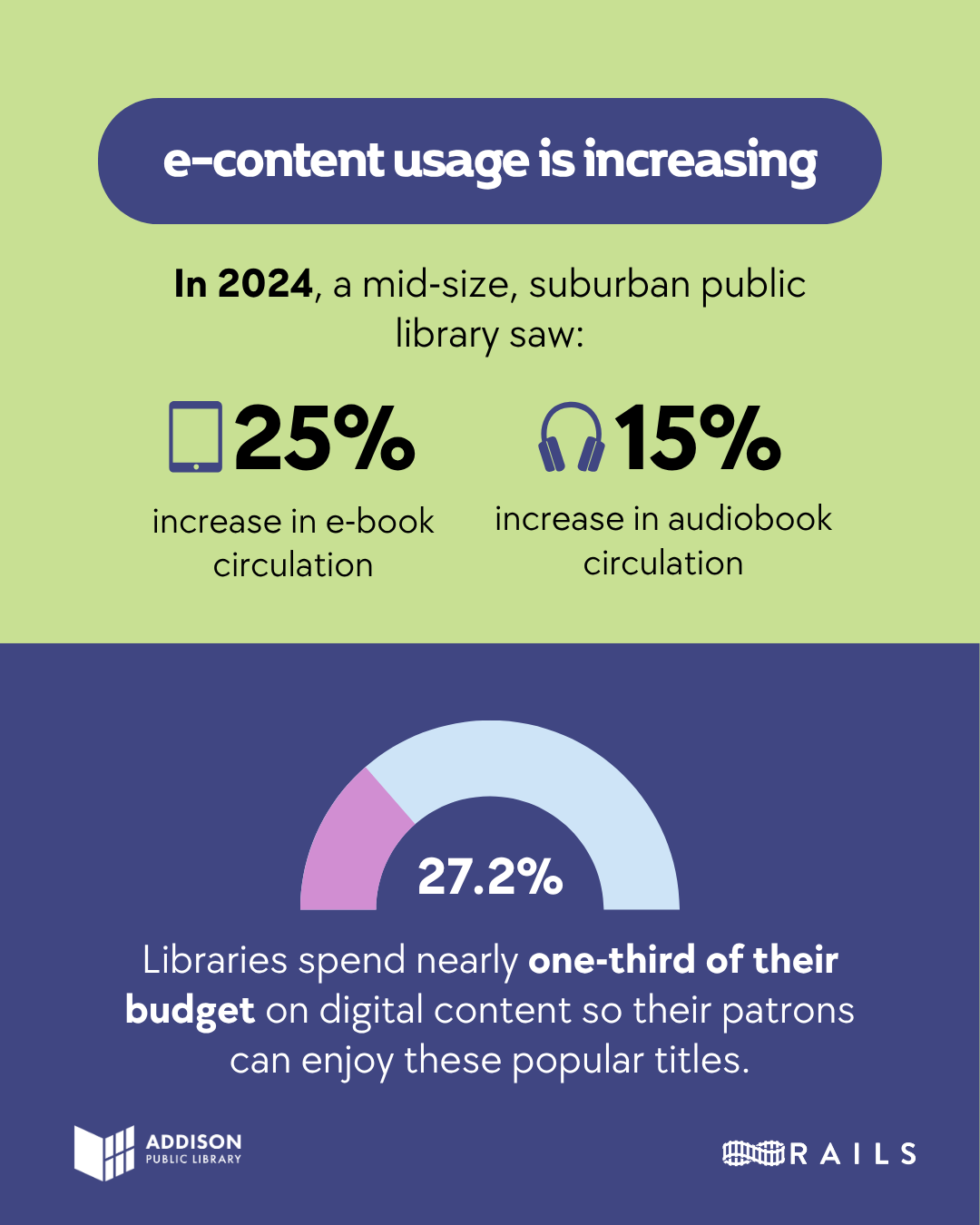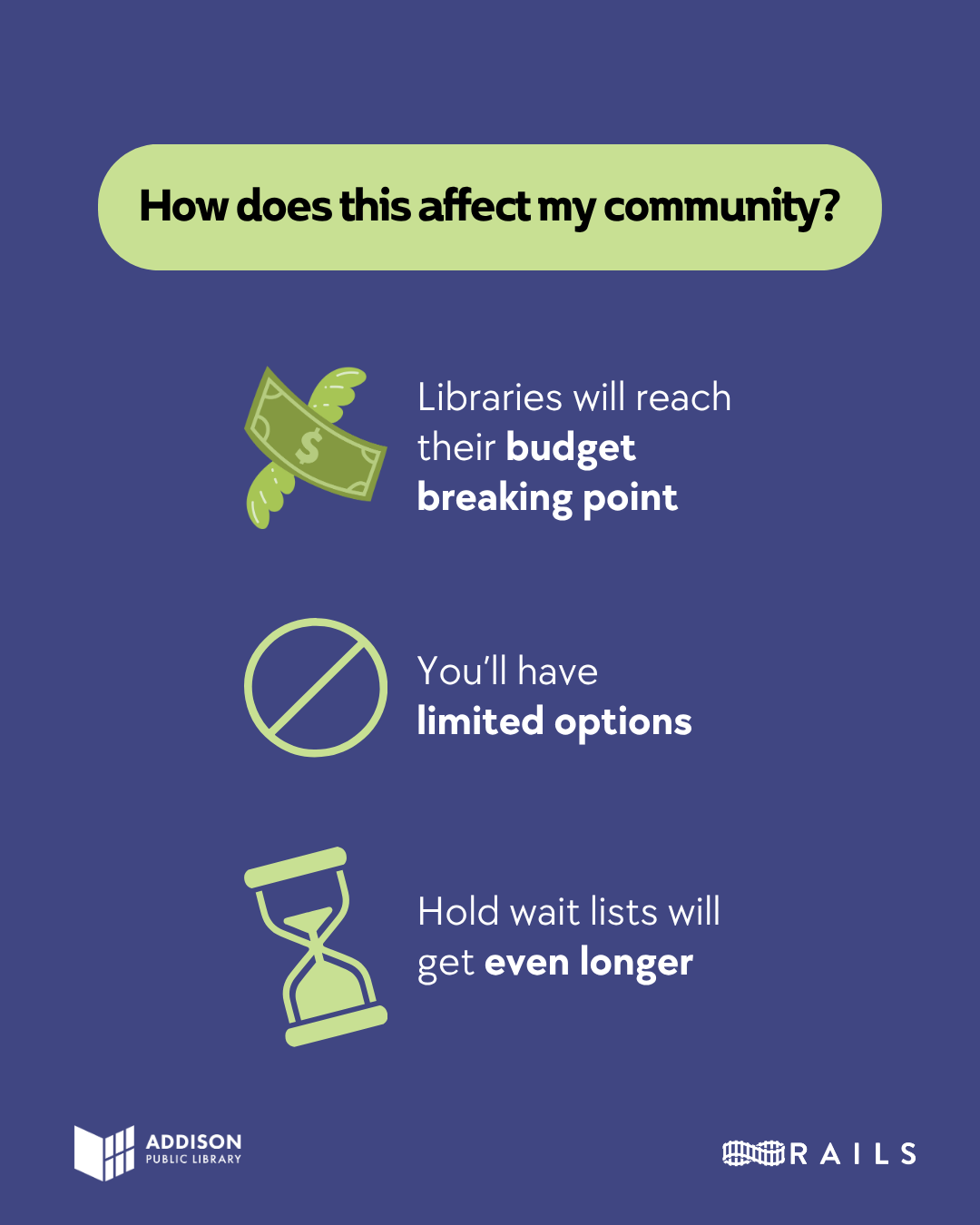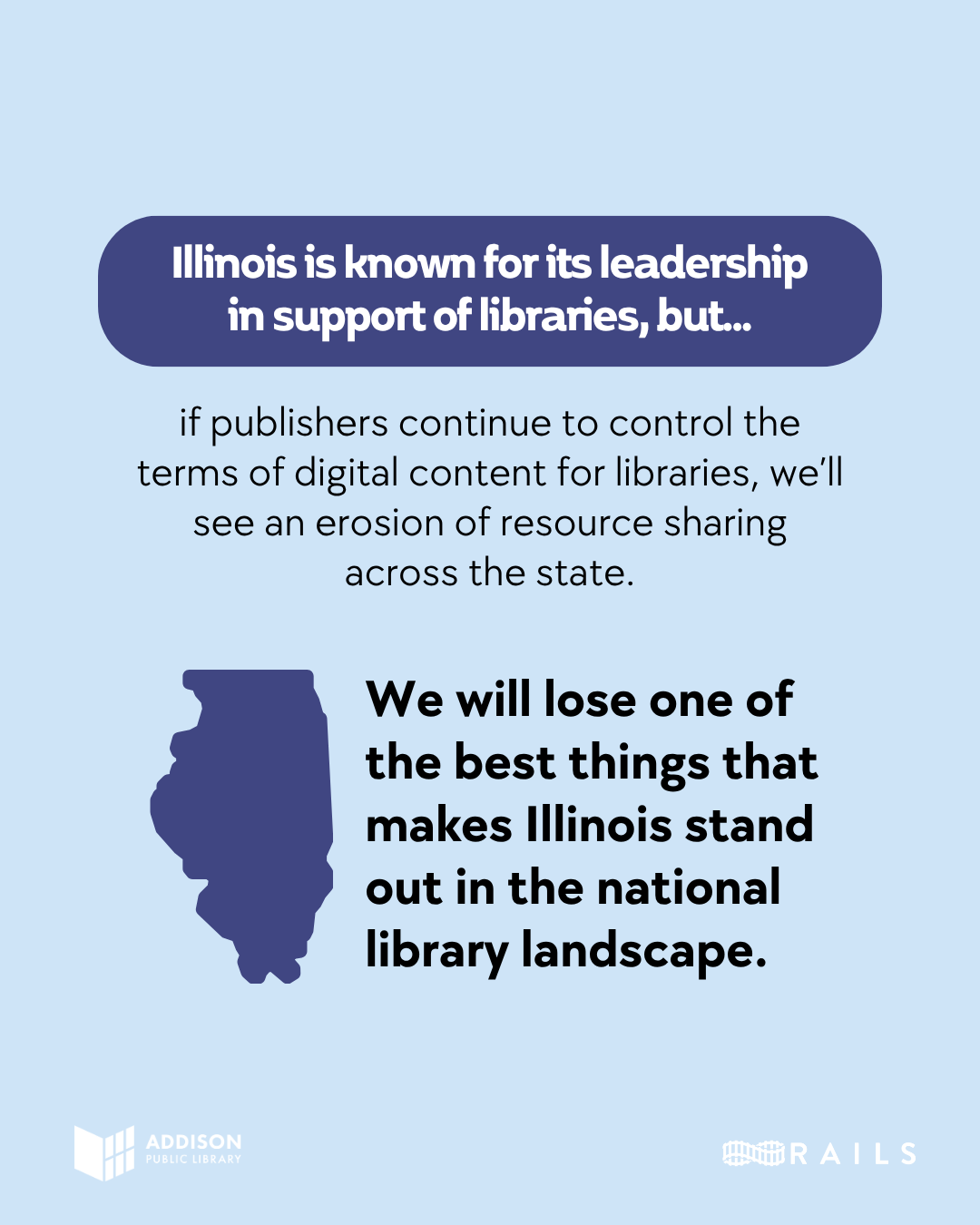
The Addison Public Library has been offering e-books since 2010. Over the past 16 years, the collection, and usage by the Addison community, has grown exponentially. Unfortunately, so have the costs. The rising cost and pricing structure of e-materials puts an enormous strain on the library budget and limits what we can offer our community.
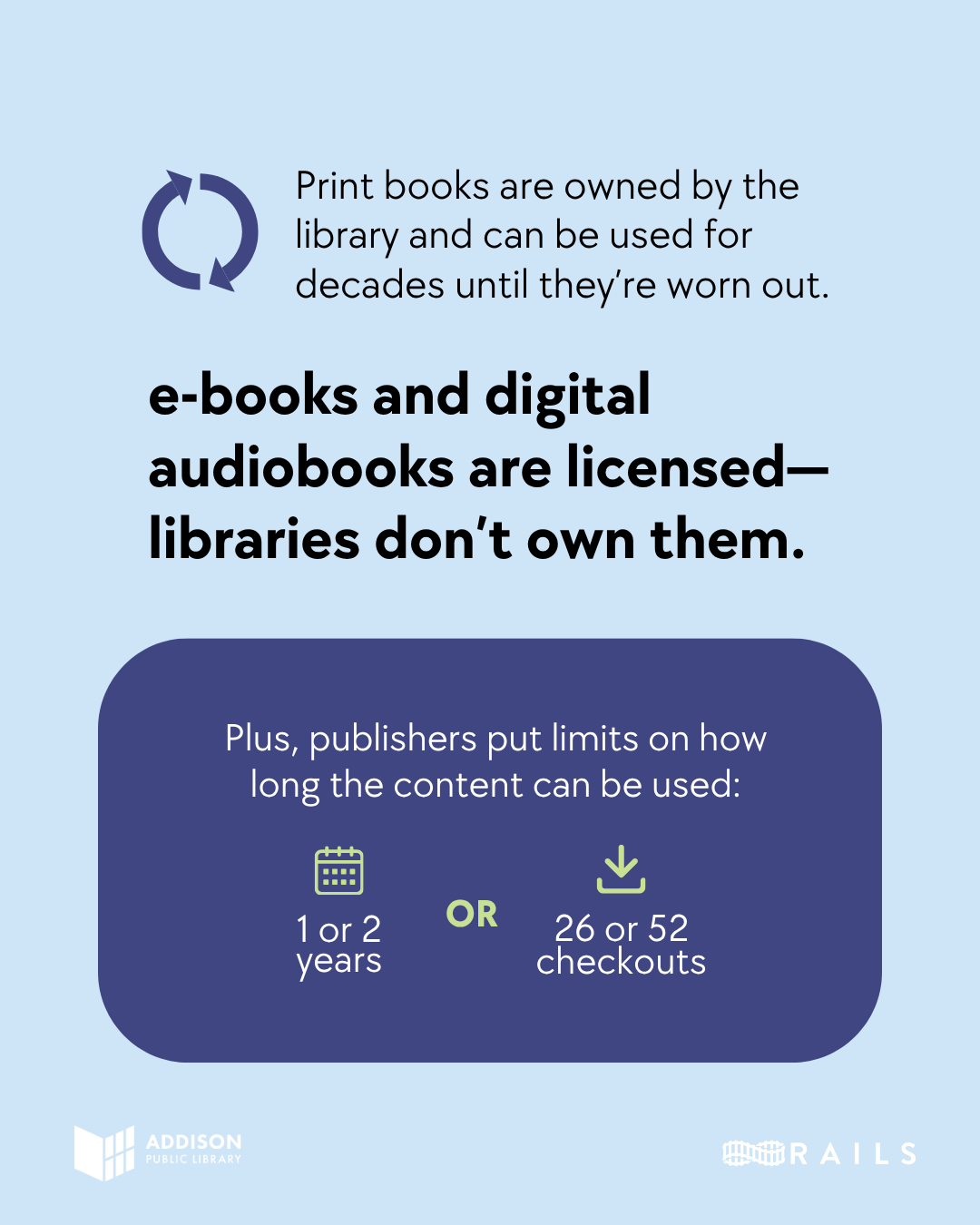
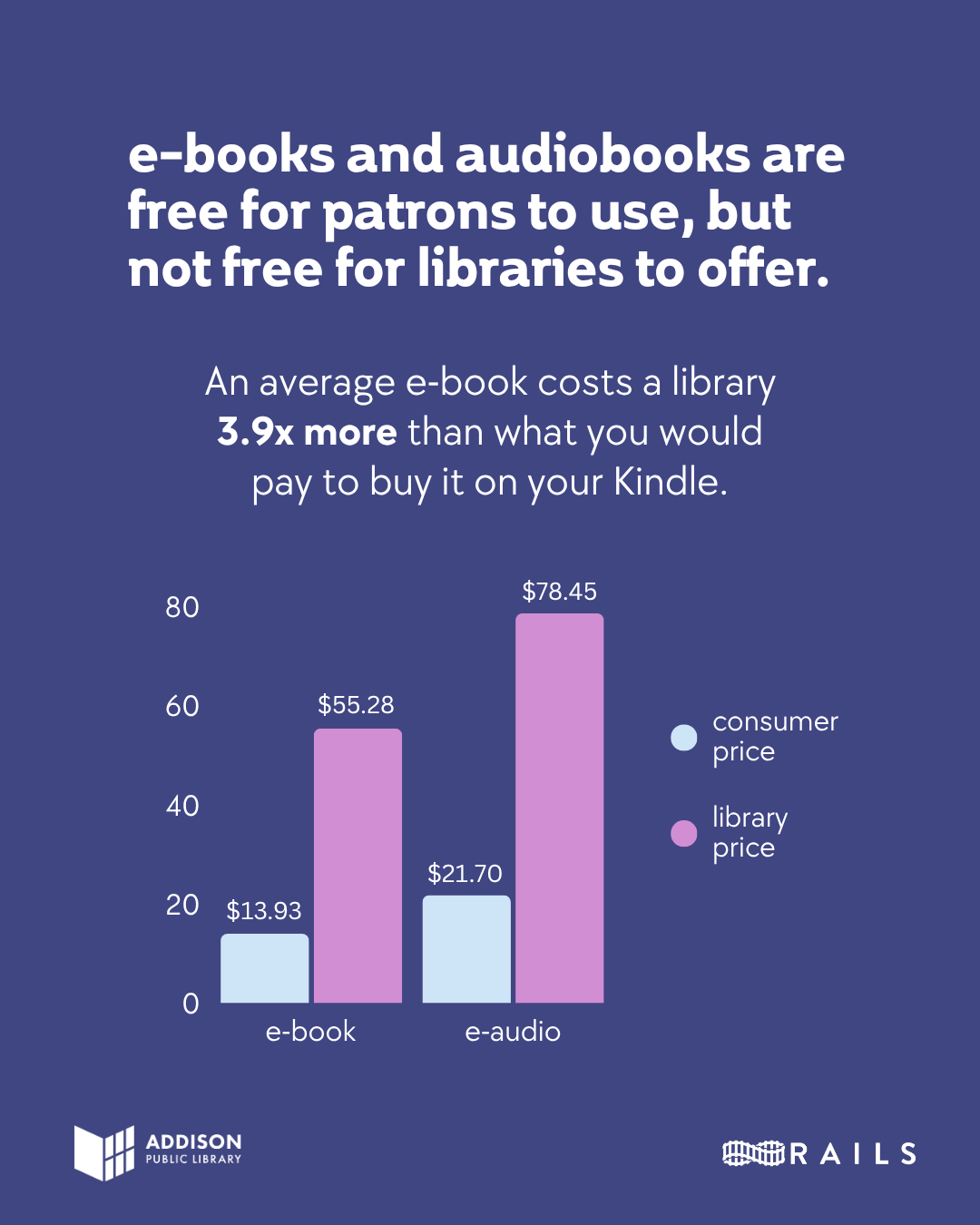
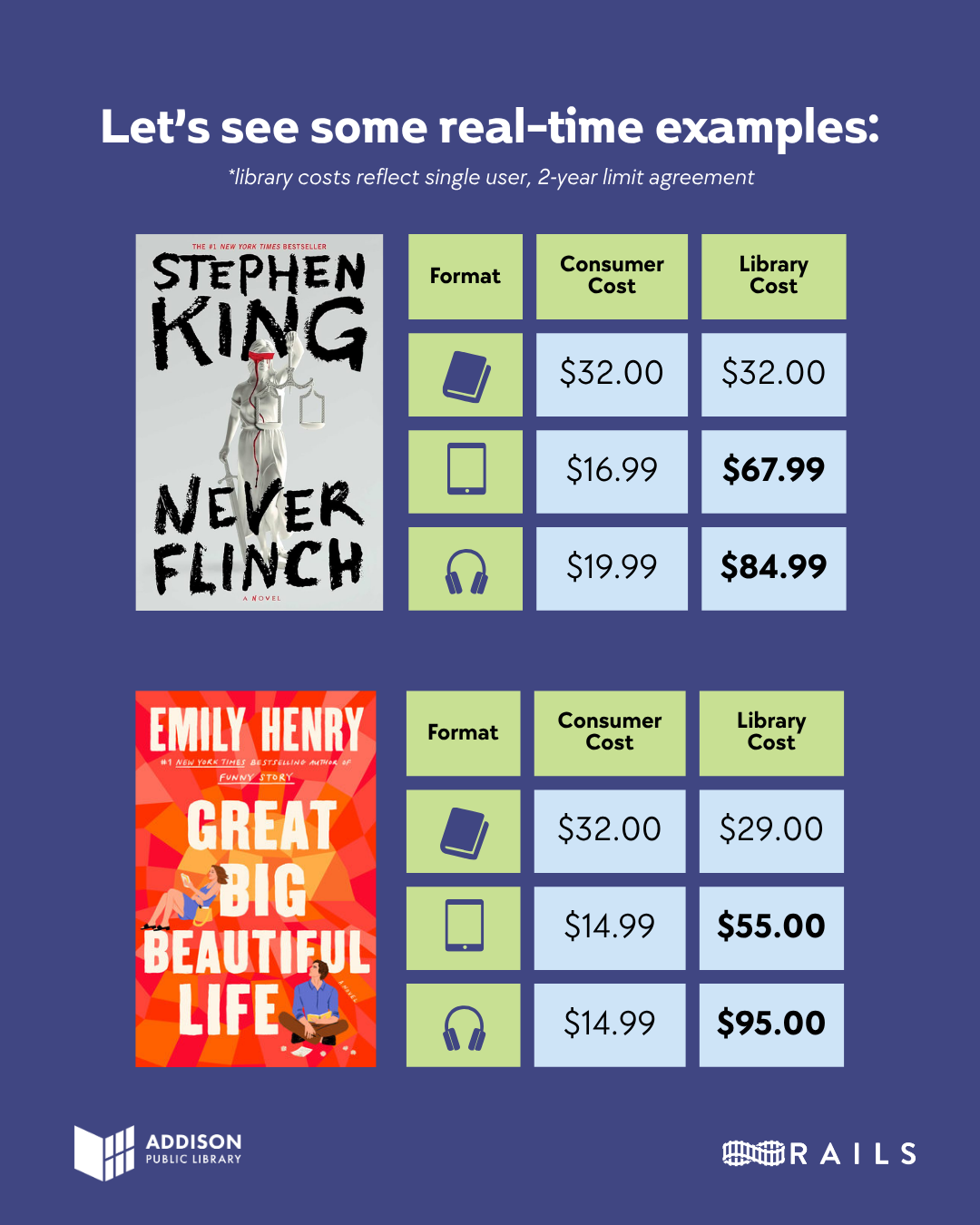
Publishers set the pricing, and libraries often pay far more than individual consumers for the same content. For example, an e-book that costs a consumer $18 may cost a library anywhere from $60–$80 or more—and those licenses eventually expire, requiring libraries to repurchase the same titles.
The benefits of e-books are wide-ranging. They are portable and available on demand from anywhere. They also offer features that make reading more accessible to everyone. E-books offer the ability for users to modify the text and font size. There are even fonts designed to help individuals with dyslexia.
E-audiobooks offer the same portability and on-demand experience in addition to bringing stories to the visually impaired, offers a reading experience through voices and sounds, and even makes it possible to enjoy a story while multitasking.
House Bill 5236, or the Digital Library Protection Act
House Bill 5236, the Digital Library Protection Act, aims to protect libraries from unfair terms and restrictions in licensing agreements for e‑books, digital audiobooks, and other digital materials. This bill would give libraries the ability to negotiate reasonable terms for eContent, helping protect both libraries and taxpayers while fairly compensating authors and publishers.
The Illinois Library Association is asking for help to move this act forward! The first step is to complete a Witness Slip in support of the bill. If this is your first time filling one out, you can find step-by-step instructions here.
A hearing on HB 5236 is scheduled for Tuesday, March 24, so please consider submitting a Witness Slip before then. Every submission makes a difference!
UPDATE: The hearing vote was 6-3, and HB 5236 now advances to the House for a vote. Please take a minute to contact your elected officials and urge them to support the Digital Library Protection Act. Lawmakers hearing directly from their constituents who are library supporters makes a real difference! Don’t know what to say? ILA has created sample scripts and templates to help you here.
For more information about the bill, including a short video overview, please visit: www.ila.org/advocacy/ready-set-advocate-ebook-legislation.